



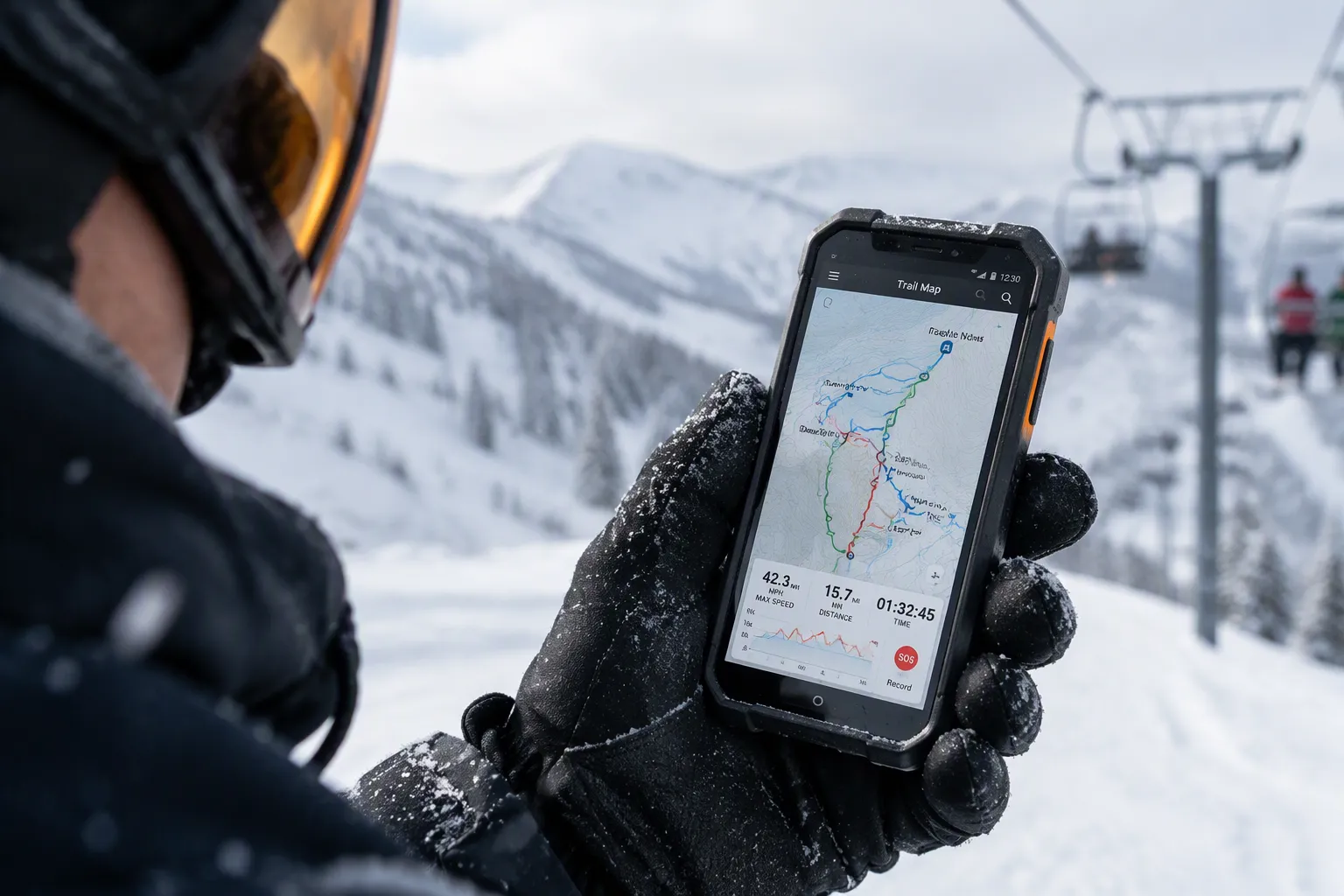
A rugged phone for skiing is the perfect snow companion because it survives the cold, wet, impact-heavy conditions that regular devices cannot handle. You know the failures already: a battery that dies on the lift, a cracked screen after one icy tumble, and frozen fingers that cannot work a touchscreen through thick gloves. This guide gives you direct answers on durability, battery performance, and glove-friendly controls, so you can pick the best phone for skiing and ride with confidence. Whether you're comparing a rugged smartphone or weighing your options for the best phone for skiing, the right rugged smartphone for skiing will keep you connected on every run.
Key Takeaways
Choose a rugged phone with IP68 waterproofing to survive snow and wet conditions.
Keep your phone in an inner pocket to protect the battery from cold.
Enable Glove Mode to use the touchscreen without removing your gloves.
Match the phone's durability and price to your skiing style and needs.
Carry a power bank and warm your phone before charging in cold weather.
Essential Features of a Rugged Smartphone
Durability and Waterproofing
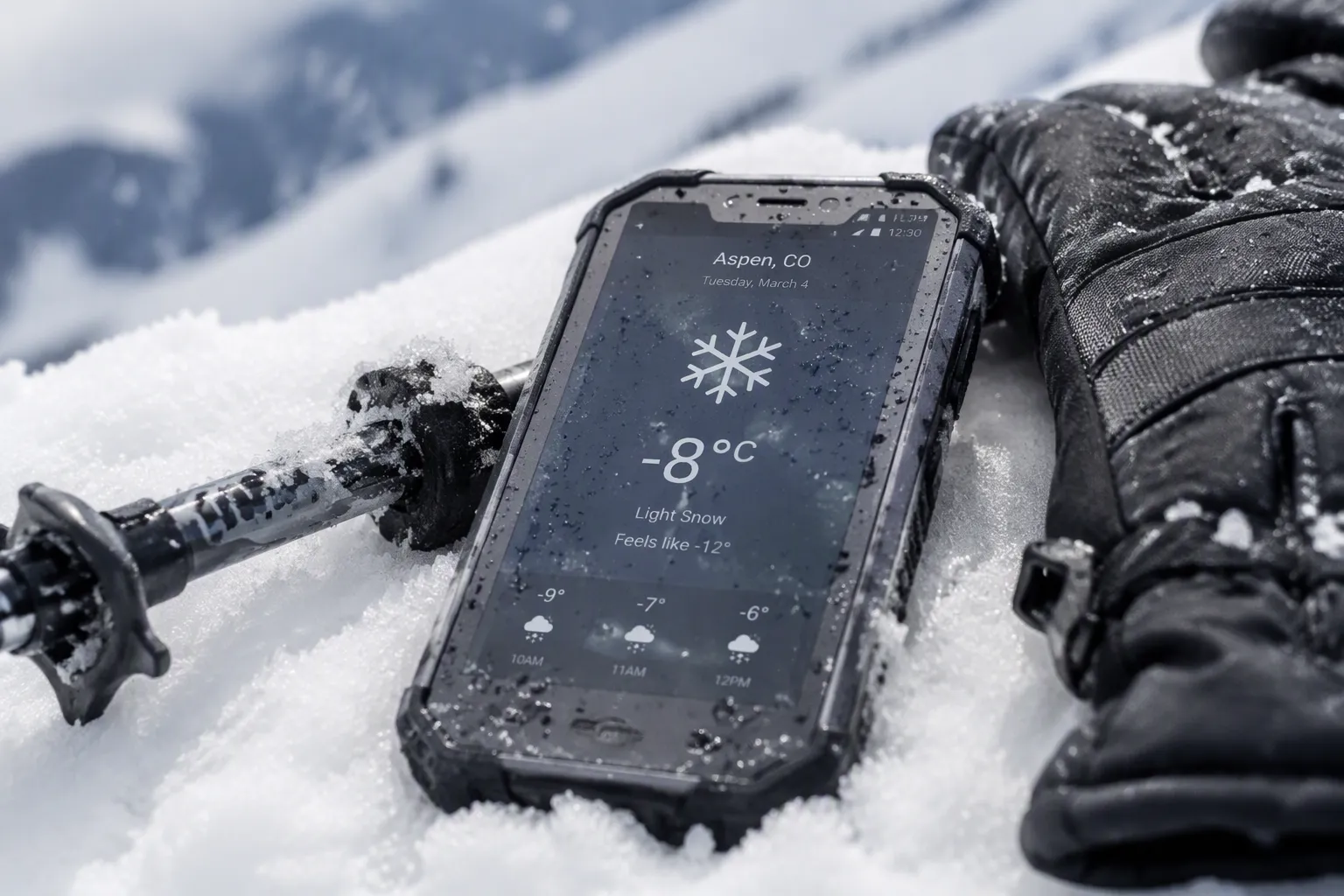
A ski-ready device starts with a reinforced chassis. Internal frames, corner bumpers, and shock-absorbing materials spread impact force away from the screen and circuit board. This construction makes a rugged phone that can survive drops onto packed snow, ice, and lodge floors. Look for a shockproof design tested against drop standards rather than a marketing slogan.
Ingress Protection ratings form the second layer of durability under harsh conditions. The "IP" prefix stands for Ingress Protection, and the two digits describe shielding from solids and liquids.
Digit Position |
Meaning |
Example Levels |
|---|---|---|
First digit |
Protection against solid objects (dust, debris) |
0 = none; 5 = dust-protected (limited ingress); 6 = dust-tight (no ingress) |
Second digit |
Protection against liquids (water) |
0 = none; 4 = splashing water from any direction; 6 = powerful high-pressure jets; 7 = short submersion (~1 m for 30 min); 8 = long submersion beyond 1 m; 9K = high-pressure, high-temperature steam jets |
IP68 — completely dust-tight (level 6) and able to survive submersion in water deeper than 1 meter for an extended period; the manufacturer must specify exact test conditions (e.g., depth and duration).
IP69K — dust-tight (level 6) and able to withstand cleaning with powerful, high-pressure, high-temperature steam jets, a rating used in hygiene-critical industries such as food processing and pharmaceutical manufacturing.
For skiing, an ip68 waterproof rating is the practical minimum. Snow, slush, and wet lift seats all expose your phone to water. An ip68 rating covers dust and water resistance for real winter use, and an ip69k dustproof rating adds headroom for wet, messy conditions. High IP ratings matter most when gloves are wet and the phone keeps sliding into snow.
Battery Life and Glove-Friendly Screens
Cold battery performance decides whether your phone lasts a full slope day. Lithium cells lose capacity as temperatures fall.
Temperature |
Battery Capacity |
Notes |
|---|---|---|
27°C (80°F) |
100% (baseline) |
Reference capacity |
~50% |
Severe temporary loss |
|
–20°C (−4°F) |
~50% |
Temporary, recovers when warm |
A ski-trip scenario is described where the phone sits in an outer jacket pocket during morning skiing in sub-zero air, then is plugged in over lunch in a warm lodge — illustrating how phones are exposed to freezing conditions during skiing activities.
That loss is temporary, and the battery recovers once warm. Still, battery life on a rugged phone depends on capacity and placement. A large battery offsets the cold penalty, and an inner pocket keeps the cell warmer. Plan charging around lunch breaks to protect battery-life across the afternoon.
Glove-friendly touchscreens solve the other half of the problem. Standard capacitive panels rely on bare-fingertip electrical properties, so thick winter gloves make ordinary displays unresponsive. Glove Mode raises display sensitivity so you can take calls, check navigation, and shoot photos without exposing your hands. Wet Touch technology extends this to wet fingers in snow and slush. Conductive fibers woven into high-end glove fingertips keep sensitivity consistent. Keep the screen frost-free, because no glove works through a layer of ice.
Rugged Phones vs. Regular Phones for Skiing
Cold and Snow Performance
A regular phone handles a resort day fine when you keep it warm and dry. A flagship in a zipped inner pocket, pulled out for a quick photo, performs well. The gap opens when conditions turn harsh. A rugged phone for skiing carries sealed ports, gaskets, and an ip68 body that shrugs off slush and wet lift seats. A regular handset relies on open charging ports and tight tolerances that punish moisture.
Impact tells a similar story. A reinforced chassis absorbs a fall onto packed snow, while a slim glass sandwich may not. Durability here is a matter of margin, not magic. Both designs work; the rugged build simply keeps more margin in reserve. Cold also drains any lithium cell, so plan around a shorter battery-life window on the mountain regardless of model. A large battery in a rugged phone offsets that loss better than a slim cell.
Ski App Fit and Carry
Ski apps lean on GPS, offline maps, and quick screen checks. Both phone types run them well. The difference sits in retention. A rugged phone usually offers a lanyard loop and a chunkier body that grips a mount or case. A regular phone needs a bulky aftermarket case to match that security.
Retention gear |
Best for |
|---|---|
Pocket-only |
Skiers who rarely check the phone mid-run |
Basic lanyard |
Occasional photographers near lifts |
Dedicated tether |
Skiers who fear chairlift drops |
Crossbody case |
Frequent map-checkers and messagers |
For frequent filming, wear a crossbody pouch under the jacket or clip a tether to a belt loop. Avoid long leashes that swing and snag. In trees or steeps, keep the phone flat and tucked in. In remote cold, add a thermal sleeve for battery resilience. Match the best rugged phone to your style, and carry either type with the same discipline.
Best Phone for Skiing: Top Rugged Picks
Specs, Compliance, and Cost
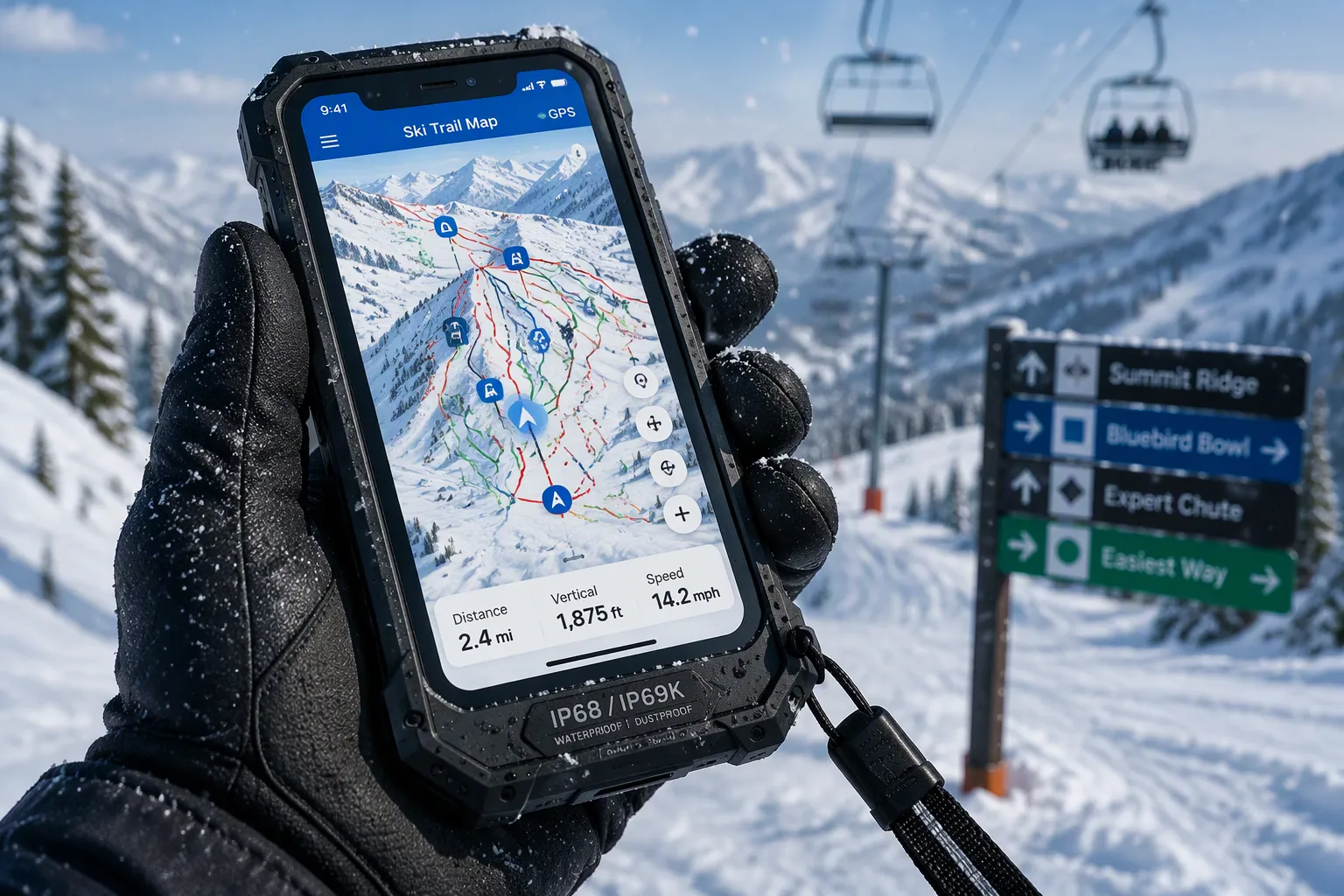
You can compare the best rugged phones on four axes: technical specs, ski-specific fit, regulatory compliance, and cost. The table below draws on listed models and their published ratings.
Model |
Regulatory Compliance |
Price (USD) |
|---|---|---|
Oukitel WP100 TITAN |
IP69K, MIL-STD-810H |
$568 |
LAGENIO Panther2 |
IP68/IP69K, MIL-STD-810H |
$112–175 |
Construction/Logistics Rugged Smartphone (Android 14) |
IP68, MIL-STD-810H |
$350–367 |
AGM H Max |
IP68, IP69K |
$89.90 |
ECO-T67M PDA |
IP68, MIL-STD-810G |
$631 |
27 Pro 5G Rugged Smartphone |
IP68 |
$392.05–443.18 |
Unihertz 8849 Hike 5G |
Not specified |
$284 |
CAT S60 |
Not specified |
$1,000 |
5G POC ATEX Walkie Talkie |
IP68, IECEX (explosion-proof) |
$488–655 |
CENAVA 6.3" Rugged 5G |
IP68 |
$613–740 |
XS18PRO MAX |
IP68 |
$94 |
5.7" IP68 Rugged Smartphone |
IP68 |
$110–125 |
E81 Rugged Phone |
IP67 |
$12.70–45 |
MIL-STD-810H appears on several ultra-rugged 5G listings, often alongside an ip69k dustproof rating and freezing protection. Treat compliance as a baseline, not a ranking. An ip68 waterproof rating covers dust and water resistance for slush and wet lift seats. The ip68 seal protects against submersion, and the higher rating adds steam-jet headroom. Cost tracks the spec stack loosely. Budget models near $90–175 still list ip68, while premium 5G units climb past $500. Match the spend to how hard you ride.
Matching a Phone to Your Ski Style
Your ski style should drive the choice, not the price tag. Casual resort skiers who check navigation at lunch need solid dust and water resistance plus a reliable battery. A mid-range ip68 model fits that profile well. The best rugged phone overall for most riders balances a large battery, a shock-resistant frame, and glove-friendly touch. Freeriders who film in trees and steeps should prioritize durability and a lanyard loop. Frequent drops onto ice make a MIL-STD-810H body worth the premium.
Backcountry users need battery-life headroom above all. Cold cuts capacity, so a big cell and warm storage matter more than camera megapixels. The best rugged phone for that group pairs freezing protection with offline maps. Travelers who want one device for everything can weigh the best rugged phones on compliance and cost together. A $1,000 flagship and a $94 budget handset both run ski apps; the difference sits in margin and retention gear. Pick the rugged phone that matches your days on snow, then carry it with discipline.
Practical Tips for Your Rugged Phone for Skiing
Mounting, Storage, and Battery Care
Wear a crossbody case like a necklace, not across your body. Keep the phone tucked under your jacket at chest height, no lower than your midsection. This placement keeps the battery warm and the screen responsive. The strap doubles as a tether on lifts, so a fumbled grip leaves the phone swinging on the cord instead of falling. Choose a soft strap built into the case over a rigid harness or single-clip tether. For wet days, switch to a sealed waterproof case that works through the touchscreen.
Warm storage protects battery-life more than any setting. Keep the rugged phone in an inside jacket pocket, never an exposed pack pocket. Wrap your power bank in a spare sock or beanie so it delivers capacity efficiently in the cold. A cold phone may show a falsely low percentage, so warm it with body heat before you panic-charge. Unplug once the battery reaches full, and clear lint from the charging port with a soft dry brush.
Screen and Camera Use in the Cold
Enable Glove Mode before you leave the lodge. This setting raises touch sensitivity so you can check navigation, answer calls, and frame photos without bare hands. Keep the display frost-free, because ice blocks any glove. Wipe the screen with a soft cloth after each run.
Cold slows camera shutters and drains the battery during burst shooting. Shoot in short sessions and return the phone to your inner pocket between shots. An ip68 body handles snow and slush, yet no seal replaces careful handling. Treat dust and water resistance as a safety margin, not a license to dunk the device. Good durability habits keep your best rugged phone ready all winter.
A rugged phone for skiing wins because it combines cold resistance, durability, waterproof sealing, and glove-friendly controls in one body. The options above differ on specs, ski fit, compliance, and cost. Budget rugged phones near $90–175 still list IP68, while premium 5G models pass $500 with MIL-STD-810H. The best rugged phone overall for most riders balances a large battery, a shock-resistant frame, and a lanyard loop. Freeriders should favor the best rugged phone with the toughest impact rating. Backcountry skiers need battery-life headroom above all.
Weigh how you ride, then match a phone to your skiing style. Check the battery, the waterproof rating, and the glove mode before you buy. Your best phone for skiing is the one built for your snow days.
FAQ
Does a rugged phone work in freezing temperatures?
Yes, with care. Cold drains any lithium cell, and capacity can drop to roughly half at −18°C (0°F). Keep the phone in an inner jacket pocket to hold warmth. The battery recovers once it warms up, so plan charging around lunch breaks.
Do I need an IP68 rating for skiing?
An IP68 waterproof rating is the practical minimum for snow, slush, and wet lift seats. An IP69K rating adds headroom against high-pressure water. Treat any rating as a safety margin, not a license to dunk the device.
Can I use the screen with gloves on?
Yes, if the phone offers Glove Mode. This setting raises touch sensitivity so you can check navigation, answer calls, and frame photos without bare hands. Keep the display frost-free, because ice blocks any glove.
How do I pick among the best rugged phones for skiing?
Compare specs, ski fit, compliance, and cost. Budget models near $90–175 still list IP68, while premium 5G units pass $500 with MIL-STD-810H. Match the spend to how hard you ride, and favor a lanyard loop if you drop devices often.
Which battery setup suits a full slope day?
A large cell offsets the cold penalty best. Carry a power bank wrapped in a spare sock or beanie, and warm a cold phone with body heat before you panic-charge. The best rugged phone for most riders pairs a big battery with glove-friendly controls.